Ham Peggotty
David CopperfieldHam Peggotty is Daniel Peggotty’s nephew, a Yarmouth boat-builder whose physical strength is matched by warmth, modesty, and steadfast care for others. First introduced as a broad-shouldered young man who carries David Copperfield home on his back, he becomes a childhood companion, Emily Peggotty’s fiancé, and, after her disappearance, a figure of lasting devotion and regret. His story gives particular weight to the difference between loving someone and claiming a right over them: Ham continues to wish Emily well even when their intended future together has ended.
Identity and Background
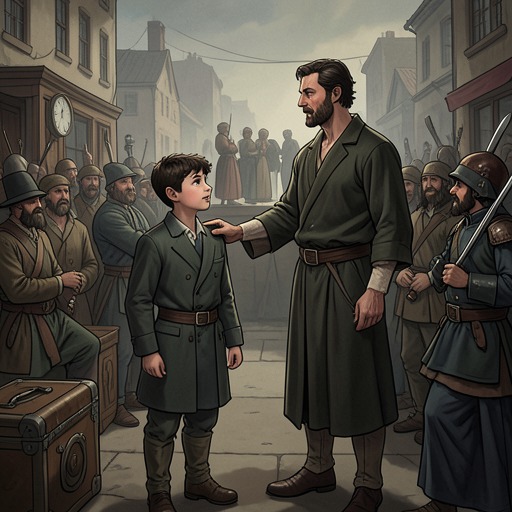
Ham is the son of Daniel Peggotty’s brother Joe. Daniel also calls him an orphan, though Ham’s robust appearance makes that loss less immediately visible to David. The contrast between his sturdy build and his youthful, almost boyish face helps establish a character who can appear bashful and physically formidable at once. When David first sees him, Ham is about six feet tall, broad and round-shouldered, with light curls and a simpering expression. His work clothes are a canvas jacket and unusually stiff trousers; his headwear is described as more like a pitchy covering than a conventional hat.
His manner is gentle rather than imposing. At their first reunion, he greets David like an old acquaintance, even though David has little memory of him: Ham had not visited the Copperfield home since the night David was born. He removes that distance by taking the child on his back and carrying him home. Later, when he and Daniel visit David, Ham’s familiar greeting that David has grown prompts a joyful reunion. David laughs, then wipes away tears; the scene makes Ham’s welcome a source of comfort amid David’s hardship.
Yarmouth and Family Life
Ham’s life is closely tied to the sea and the working rhythms of Yarmouth. During David’s childhood visit, the tide determines when Daniel goes out and comes back, and it also shapes Ham’s engagements. When he is not occupied, Ham walks with David and the others to see the boats and ships, and sometimes takes them rowing. David’s later memory of Yarmouth returns to a Sunday morning on the beach: Emily leaning against him, Ham dropping stones into the water, and ships emerging from the mist. Ham belongs to this remembered landscape not as a distant emblem but as a companion in its ordinary pleasures.
He is also part of a household bound together by care rather than blood alone. Daniel identifies Ham as another orphan, and Ham’s treatment of Mrs. Gummidge offers a small example of his attentiveness. When she breaks down in tears during a departure, calling herself a burden, she sinks into Ham’s arms; his presence gives her immediate support even as her grief interrupts the festive mood. The gesture accords with his broader character: he is physically strong, but his strength is repeatedly used to shelter and assist other people.
The family’s connection with David continues after he leaves Yarmouth. In a letter, Clara Peggotty reports that Daniel and Ham are well, while Mrs. Gummidge is poorly and Emily will not send her love, though she allows Clara Peggotty to send it on her behalf. This update preserves the household’s place in David’s life while hinting at Emily’s reserve. When Ham later encounters David again, his delighted grin and stumbling attempt to speak convey how much the reunion matters to him; Daniel’s exuberant, playful blow to Ham’s chest is described as a sign of confidence and friendship between them.
Work and Relationship with Emily Peggotty
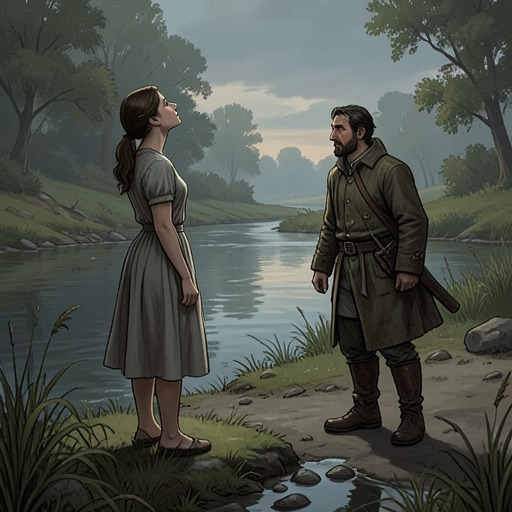
By the time David sees him again as a young adult, Ham has become a skilled boat-builder, having developed a natural aptitude for the craft through practice. He is still in working clothes, and his rugged appearance is joined by an open expression of honesty and pride. At his side is Emily, whose beauty and promise he plainly cherishes. David sees the pair as well matched, noting especially Ham’s undisguised affection and the frankness of his face. Ham’s love is not a private abstraction: it is visible in the way he accompanies Emily and in the pride he takes in her.
Ham and Emily become engaged, but their plans are broken when she elopes with James Steerforth. Before that rupture, Ham’s care extends beyond their courtship. He helps Emily assist Martha, a young woman Emily once knew and believes she should no longer know. Ham explains to David that he could not refuse Martha when she was crying, and that Emily had given him a small purse to carry for her, knowing what it was meant to do. The purse contains little money, and Ham’s reflection on its smallness underscores the limits of what the group can offer materially; nevertheless, he takes part in the effort to help.
In a later moment of distress, Ham says that Emily wishes to be left until morning and asks to stay as well. His response respects her stated wish while offering his own presence. The episode makes his care attentive rather than merely protective: he does not insist on deciding for her, but asks to remain nearby. After Emily is gone, Daniel’s declaration that the person he loved and hoped for has disappeared also marks the loss of the future Ham had expected. Ham’s own feelings become clearest in what he says later, when he revisits the broken engagement and considers what his love could and could not have changed.
Loss, Regret, and Enduring Loyalty
When Daniel prepares to search for Emily, Ham draws David aside and asks him to be a friend to Daniel. Ham believes Daniel’s life has been broken open and that the search may occupy him for the rest of his days unless he finds the person he seeks. In asking David to stand by Daniel, Ham turns his own grief outward: his concern is not only for his lost relationship, but for the uncle whose life and purpose have been consumed by the search.
Ham continues to visit Mr. Omer, Emily’s former employer, sometimes spending an evening talking or reading with him. Mr. Omer calls this kindness and describes Ham’s life itself as an act of kindness. Ham also asks David whether he has seen Emily. These details show that the broken engagement has not made him withdraw from the people connected to her, even as uncertainty about her whereabouts persists.
When Ham speaks directly about the past, he does not present himself as simply forgiving Emily. He asks instead to be forgiven for having pressed his affections upon her. He wonders whether, without the promise to marry him, Emily might have trusted him as a friend and confided what was troubling her; perhaps then he could have helped her. His regret is therefore directed partly at the shape of their relationship, not only at its outcome. He imagines that the expectations attached to their engagement may have made it harder for her to speak freely.
Ham tells David that he loves Emily and the memory of her too deeply to make himself happy by forgetting her. He asks David to convey that he still loves and mourns her, hopes to see her without blame, and does not imagine marrying someone else. The message preserves his attachment while asking that Emily not mistake his suffering for a demand that she return. His love remains, but he does not make it a claim on her future.
Narrative Role and Significance
Ham’s arc links the warmth of David’s early memories of Yarmouth to the novel’s later account of loss and separation. The childhood outings, the tide-bound routine, and the remembered beach establish a familiar community; the broken engagement and Ham’s continuing search for news reveal what happens when that shared world is fractured. Across both parts of the story, his defining quality is practical tenderness: carrying David, supporting Mrs. Gummidge, helping with Martha’s small purse, and asking David to accompany Daniel in his grief.
His final reflections complicate a conventional story of the abandoned fiancé. Ham does not deny his pain, and he recognizes that his promise to Emily may have contributed to her inability to confide in him. Yet he resists turning disappointment into accusation or a demand for renewed possession. By asking David to communicate love without implying that another person could replace Emily, Ham makes devotion inseparable from mourning. His character thus offers a quiet counterpoint to Steerforth’s damaging conduct: where Steerforth’s actions leave Emily estranged from her family, Ham’s response is to preserve her dignity, acknowledge his own possible failure, and hope that she may one day be seen without blame.